
Retiring one work van is different from clearing an occasional personal vehicle. For a Langley Township contractor, the van may still appear on a job-cost sheet, carry a company plate, hold tools or customer information, and be the backup vehicle for a crew. A planned Langley Township contractor van fleet disposal conversation therefore starts with records and a workable date, not with a rush to empty a parking stall. Call 236-242-4288 to discuss your vehicle.
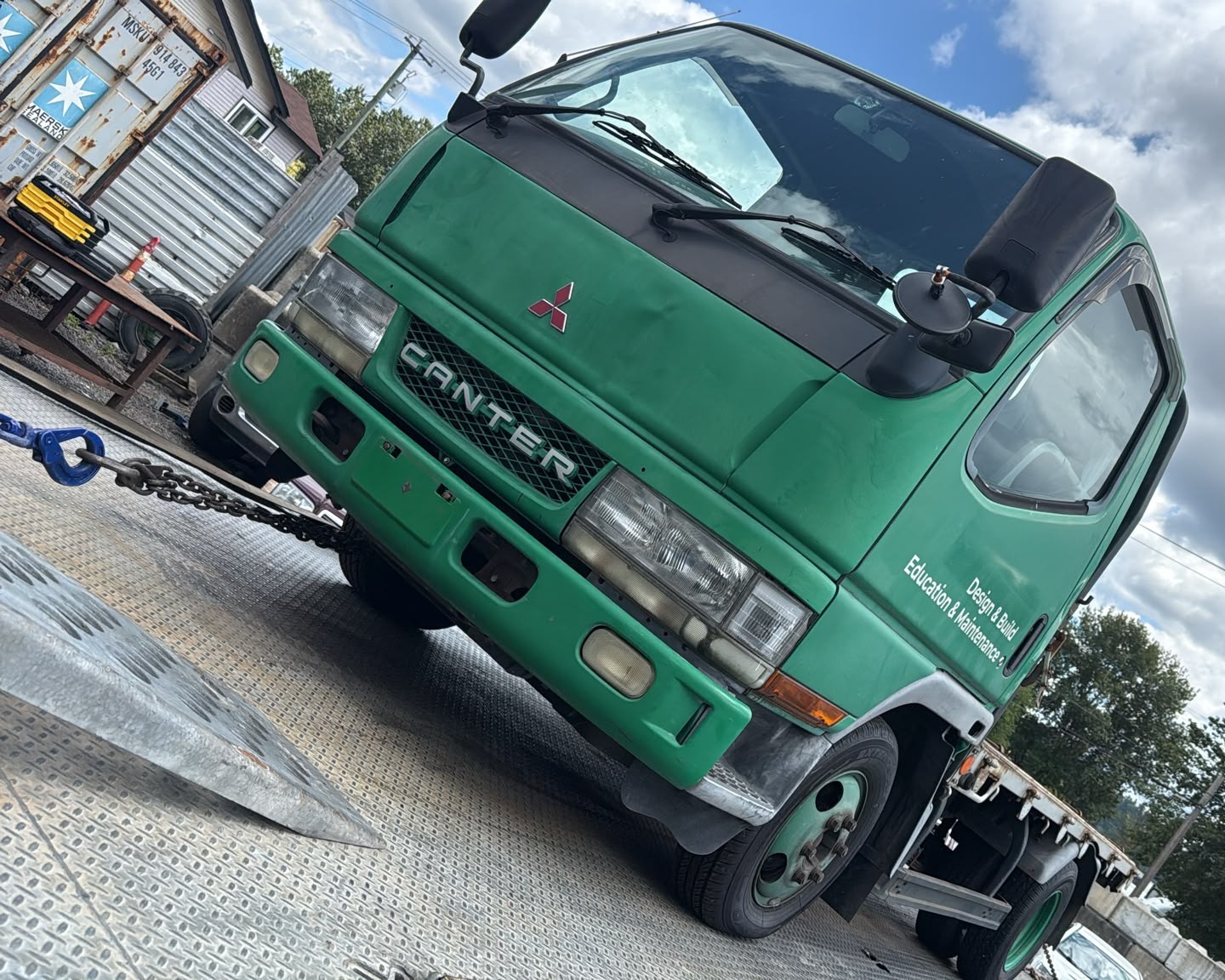
This guide is for owners, managers, and administrators who are arranging the retirement of a contractor van from a business fleet. It focuses on the information a seller can organize, the questions to raise before setting a collection date, and the local administrative context that can help a fleet change stay orderly. It is not a promise of a particular removal method, timing, payment, or downstream handling. Each van, site, and ownership record deserves a direct discussion.
Build a one-page retirement record for each van
For a single vehicle or several units, begin with one clear record per van. This makes it easier to match the physical vehicle, the company’s records, and any ownership paperwork. It also prevents a common fleet problem: a crew assumes a van is available while it has already been set aside for retirement.
- Internal unit number, year, make, model, body style, and vehicle identification number.
- Current plate number, registration status, insurance status, and the name shown on the registration.
- Current odometer reading, general operating condition, and whether the van can be moved under its own power.
- Exact parked location, including the business yard, project site, or other private-property location and the best contact at that location.
- Whether company decals, fleet tags, toll devices, parking credentials, tools, paperwork, or customer information remain in the van.
- The proposed retirement date and the replacement vehicle or alternate crew arrangement, if one is planned.
Keep this record factual. A short description such as “2014 cargo van, fleet unit 17, parked behind the warehouse, does not start” is more useful than guessing about a mechanical cause. If the van has collision damage, note what is plainly visible and whether it affects access or movement. The person arranging disposal can then ask service providers what additional information they need rather than making assumptions.
Separate operating records from ownership records
A contractor’s maintenance file, asset list, insurance papers, and vehicle registration do different jobs. Before the retirement date, identify who in the company is authorized to make the decision and who holds the original registration documents. A site supervisor may know the van’s condition, while an office administrator may hold the paperwork. Bringing those two streams together early reduces last-minute calls when the van is already scheduled to leave the site.
ICBC’s public guidance supports a record-first approach to a change in vehicle ownership. It says: If you cannot visit the Autoplan broker with the buyer, keep copies of all related documentation (with original signatures from both you and the buyer) for your records. This is a useful prompt for a contractor fleet: assign responsibility for retaining the signed documents, record where the copies are stored, and make sure the fleet list is updated only after the company’s required steps are complete. For vehicle-specific questions, an Autoplan broker can explain the appropriate next step.
ICBC also directs sellers to remove licence plates from a vehicle being sold and to address insurance and registration. The details can vary with the company’s circumstances and the transaction, so do not rely on a general fleet checklist as a substitute for current advice. Instead, identify the plate and policy associated with each van and ask the appropriate broker what must be done before or after the ownership change. If a replacement vehicle is involved, clarify its licensing separately rather than assuming the outgoing van’s status carries over.
Use the Township calendar as a scheduling checkpoint
Fleet retirement can be scheduled around project work, shop capacity, and office deadlines. In Langley Township, it can also be sensible to check whether the business’s own annual administration dates affect who needs to sign off or where records will be filed. The Township has announced: Starting January 1, 2026, all business licences will renew annually on the same date, with expiry on December 31. For a contractor, that is not a rule about disposing of a van. It is a practical calendar marker for reviewing business records and confirming that contact details and internal responsibilities are current.
The Township states that businesses operating there, including commercial businesses and contractors from other municipalities working in the Township, must have a valid business licence. That context matters when a fleet manager is coordinating a van retirement with active jobs: verify internally which business entity is operating, which employee is the authorized contact, and whether an external contractor’s work is being scheduled through the correct company channel. This is an administrative check, not a claim that a van disposal requires a new business licence.
Plan the handoff around site access without creating a road-work assumption
Set a proposed date only after the person at the van’s location has confirmed the site facts. Ask whether the vehicle is behind a gate, in a shared industrial yard, at an active construction project, or in a place where other trades need the same lane or parking area. Note gate hours, a safe contact number, overhead or width constraints that are visible, and whether equipment or other vehicles must be moved first. These details allow a service provider to assess the request and tell you what is possible.
Do not assume that a normal private-property vehicle handoff involves municipal road work. But if a contractor’s proposed activity would involve work on or in a municipal road or right-of-way, the Township’s requirement is precise: Work on or in municipal roads or rights-of-way requires a Highway Use Permit. That is a reason to distinguish a private-yard arrangement from a plan that would occupy or affect municipal space. When there is uncertainty, consult the Township’s engineering guidance instead of improvising access or traffic control.
A clear schedule has a primary contact, a secondary contact, the van’s exact location, the paperwork status, and a contingency if the van is blocked in. It also identifies what remains in the van and who is responsible for removing it. Avoid putting tools, job files, keys for other equipment, customer records, or company devices into an ambiguous handoff. The goal is an accurate company record and a calm transition, not an unrealistic promise that every issue can be resolved on the same day.
Questions to ask before confirming a contractor-van disposal date
- Who is the registered owner, and who is authorized to approve the company’s decision?
- Which original documents, plates, and insurance items need attention, and who will speak with the Autoplan broker?
- Can the van be accessed at the stated location, and are there site rules that the contact should explain?
- Does the van contain tools, fleet technology, decals, job paperwork, or personal property that the company must remove?
- What information does the service provider need to assess the vehicle and the appointment request?
- Where will signed documents and the final internal fleet-status record be retained?
These questions keep the conversation in the seller’s hands. They also avoid two unhelpful extremes: treating a company vehicle as though it has no administrative trail, or assuming that every operational detail is a formal legal requirement. Document the facts, ask the right party for clarification, and allow time for company approval and registration-related steps.
A focused next step for Langley Township contractors
Golden Ears Vehicle Recyclers can discuss a Langley Township contractor van fleet disposal request when you have the van’s basic identification, its location, its condition, and the company contact who can confirm the details. Tell us what you know, ask what information is needed for the request, and keep your own records organized while you complete the appropriate ownership and insurance steps.
We do not sell used parts. To begin a seller-focused conversation about retiring a contractor van, call 236-242-4288.
Official local and provincial references
Township of Langley business licences
Township of Langley annual business licence renewal update
Township of Langley engineering forms and Highway Use Permit guidance