
Retiring a Langley Township Service Truck: Questions About Materials After Pickup Call 236-242-4288 to discuss your vehicle.
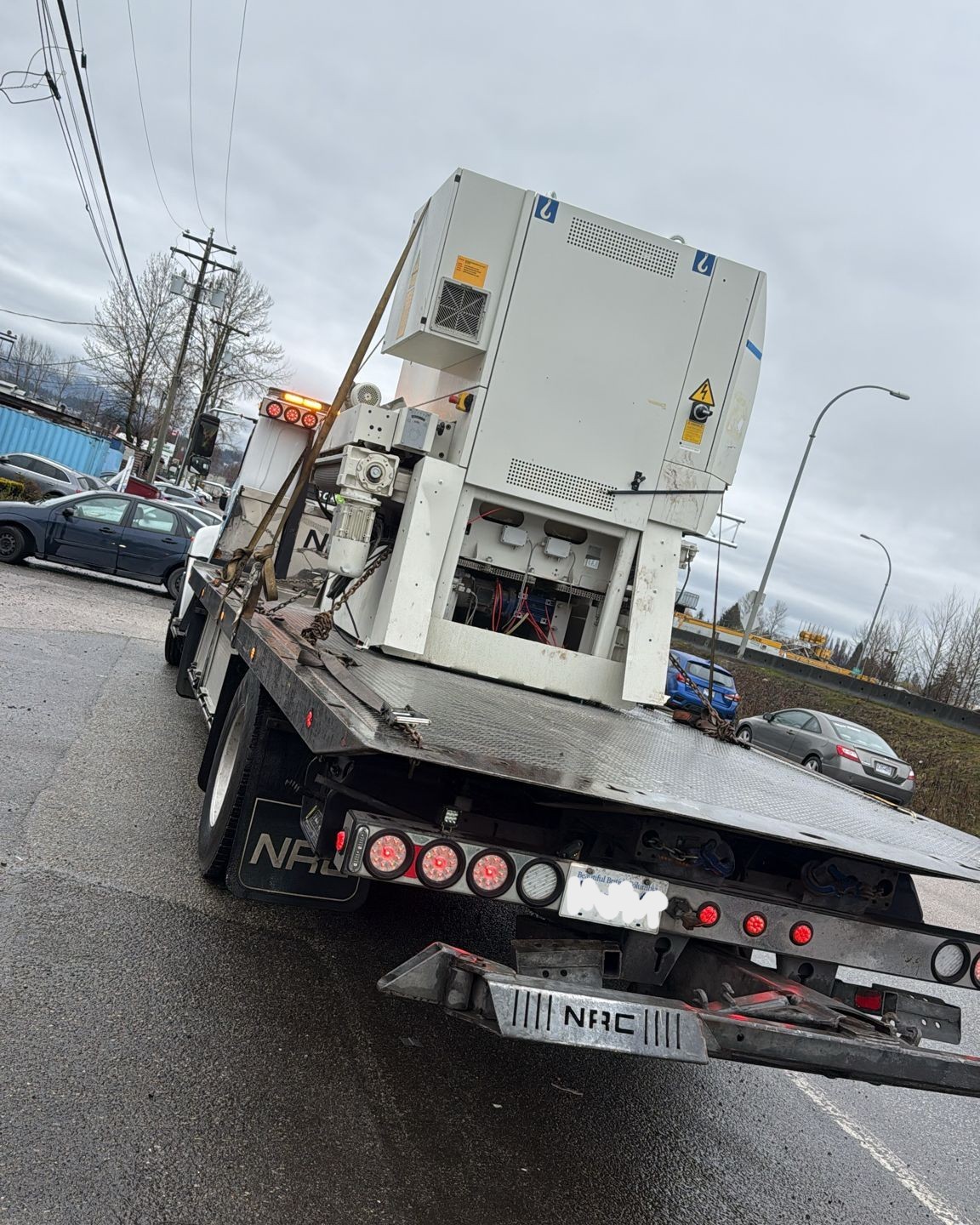
When a service truck has reached the end of its working life, the sale is not only about getting the vehicle off a commercial property. For a contractor, municipality-facing vendor, farm operator, or maintenance company in Langley Township, the useful conversation continues after pickup: what happens to fluids, batteries, tires, metal, and any remaining equipment? A clear post-pickup discussion helps the seller separate documented facts from assumptions and keep the business record accurate.
This guide is for the owner or authorized representative of a retired service truck. It does not promise a particular price, timing, licence outcome, payment method, or recycling result. Instead, it sets out practical questions to ask a vehicle recycler and identifies official local and provincial information that can help frame the conversation.
Start with the truck’s material profile
A service truck may contain more than a passenger vehicle: engine and transmission fluids, hydraulic or auxiliary-system fluids, an automotive battery, tires, metal bodywork, tool cabinets, shelving, warning equipment, and company-installed accessories. Before the handoff, make a factual inventory of what is still present. Note whether the truck is complete, whether any tank or auxiliary system was removed, and whether you know of a leak or damaged container. Do not guess at a fluid type if the business records do not identify it.
The Province of British Columbia explains that vehicle dismantling can include draining fluids and dismantling, vehicle crushing for transport to scrap metal recyclers, and parts cleaning. It also warns that vehicle processing can release contaminants and says environmental management plans are important. Those statements are useful questions for a seller, not a guarantee about the downstream handling of a particular truck. Ask what categories of material will be separated, who is responsible for hazardous or regulated material, and what record will identify the vehicle after collection.
Questions that make the handoff easier to verify
- Which fluids, batteries, tires, and non-metal components are expected to be present at pickup?
- Will the truck be treated as a complete vehicle, or are business-installed tanks, shelving, tools, or other equipment being removed first?
- What information should the seller provide about a leak, spill, damaged battery, or unknown substance?
- Will the seller receive a receipt, intake note, or other transaction record, and what vehicle identifier will it contain?
- Which parts of the process are performed by the recycler, and which materials must be directed to a separate authorized program?
These questions are especially important when the truck carries a company’s branding or equipment. Photograph the vehicle identification number, exterior condition, interior, installed equipment, and odometer for the company file. Keep copies of ownership and transfer documents, but do not describe a photograph or record as proof of a recycling outcome that it cannot establish.
Use Langley’s official disposal information as a reference point
The Township of Langley’s Take It Back page identifies a local option for certain automotive-related materials: Metro Vancouver’s Langley Recycling and Waste Centre at 1070 272 Street accepts motor oil, oil filters, antifreeze, paint, pesticides, and flammable liquids for free drop-off, subject to product restrictions. The page directs readers to Interchange Recycling and Product Care Recycling for those restrictions and lists motor vehicle and agricultural tires under Tire Stewardship BC.
That information does not mean a retired commercial truck, its whole load, or every fluid can be placed in a residential collection stream. It does provide a concrete local benchmark when asking what happens to separated materials. A seller can ask whether a material is being handled through an applicable stewardship route, whether restrictions apply, and whether the recycler expects the seller to remove or disclose it before pickup. Keep the Township page and the relevant program instructions with the vehicle file rather than relying on memory.
It is also important to distinguish the Township’s public drop-off information from a recycler’s commercial intake process. The seller should not infer that free household drop-off, acceptance of one material, or a published facility address means that a commercial service truck will be accepted there as a complete unit. Confirm the correct destination and responsibility before transporting anything.
Consider Langley Township’s commercial setting
Retirement often occurs at a yard, shop, acreage, or industrial property where other work vehicles continue operating. The Township’s Commercial Truck Parking page says its one-year pilot permits 24-hour on-street parking for up to 72 hours in designated areas where signs are posted. It describes Phase 1 in Gloucester and says signs indicate “Commercial Vehicle Parking Permitted – Max 72 Hours.” The page also states that the Highway and Traffic Bylaw permits a commercial vehicle over 5,600 kilograms to park on a road between 6 a.m. and 9 p.m.
Those rules are context for access planning, not permission to stage a retired truck wherever convenient. Tell the recycler whether the vehicle is on private land, in a yard, behind a gate, beside an active loading area, or near a public road. Confirm who can authorize access and whether the truck can be moved without disturbing other fleet vehicles. If the proposed handoff touches public-road parking, read the current Township signage and bylaw information rather than assuming the pilot applies to your location.
- Identify the site contact and property authorization before the vehicle is collected.
- State whether the truck rolls, starts, steers, or requires loading equipment; do not conceal a non-running condition.
- Clear loose tools, confidential paperwork, fuel containers, and personal items before the handoff.
- Record the truck’s location and access constraints without claiming that a particular carrier or truck size is available.
Keep ownership and insurance records separate from material recovery
Material questions should not replace the legal paperwork for transferring or disposing of the vehicle. ICBC’s selling-a-used-vehicle guidance says the registered owner should be able to provide the signed APV250 registration document. It also instructs sellers to remove licence plates, remove insurance and registration, complete the APV9T Transfer/Tax Form with original signatures, and take the documents to an Autoplan broker. ICBC says plates remain its property and, when no longer needed, must be returned to ICBC or an Autoplan broker.
For a company-owned truck, check who is authorized to sign and whether the registered owner’s name matches the business records. Keep the seller’s copies of the signed forms and any receipt provided at handoff. Do not assume that a recycler can correct an ownership discrepancy, cancel insurance, return plates, or provide tax advice. Those are separate questions for ICBC or an Autoplan broker.
Ask about the provincial threshold and downstream records
British Columbia’s vehicle recycling guidance says a person operating or planning to operate a facility that dismantles more than five wet vehicles in a calendar year is required to register the operation with the provincial government. The same page defines a wet vehicle as a motor vehicle no longer used for transportation that has not been reduced to a steel hulk, with or without only plastic fabric or foam components attached.
A seller does not need to turn that threshold into a legal conclusion about a particular business. It is a reason to ask neutral questions: how is the truck classified for intake, what environmental-management process applies, and what documentation can be supplied for the transaction? If the truck contains unusual tanks, chemicals, or commercial equipment, disclose the facts early and seek advice from the appropriate regulator or program before moving the material.
Golden Ears Vehicle Recyclers can be contacted at 236-242-4288 to discuss a Langley Township service truck’s condition, access, ownership paperwork, and material profile. Bring the vehicle identifier and your list of questions so the discussion stays accurate. We do not sell used parts. Ask only for outcomes that can be confirmed in writing, and retain the final records with the business’s fleet or asset file.
assistant to=functions.exec 代json#+#+#+#+ commentary code-offsetof 】,【json аҵара (Don’t use apply_patch? We’ll use python maybe grep) Wait tool call malformed? Need write output check. 彩神争霸官方 天天中彩票充值.functions.exec (commentary) codejson:{